

Author

Anna John

Browsing

Summary

  • Online visibility depends on SEO.
  • Local SEO specialists in the Philippines can enhance your online presence.
  • Having an SEO specialist in Manila can lead quality traffic and boost sales.
  • Local expertise places you ahead in the highly competitive online space.

If you run a business or oversee marketing for one, then you know how critical it is to be noticed online. With more companies than ever going online with their marketing, ensuring that potential customers are able to find you on the internet easily has never been more vital. This is where an SEO expert in the Philippines can really help.

What Is SEO, and Why Does Your Business Need It?

SEO, or Search Engine Optimization, is the practice of optimizing your website so that it appears higher in search engine results like Google. Imagine you have a restaurant in Manila. If someone searches for “best restaurants in Manila,” wouldn’t it be great if your restaurant were one of the first choices to show up? This is what an SEO professional can do for your company—they ensure that your site becomes accessible to your market when they search for corresponding products or services.

Having an SEO Manila expert involves working with a person who understands the local market, your target audience, and can assist you in ranking better on Google. A local specialist will optimize your website according to Filipino user habits, which may result in increased traffic and, eventually, sales.

The advantages of hiring an SEO expert from the Philippines

  1. Increased Visibility

SEO makes sure your business is visible to the right people at the right time. A well-optimized website gets more organic traffic, which is cost-friendly and long-term.

  1. Improved User Experience

A proper SEO professional doesn’t only care about keywords. They will also help optimize your site’s loading speed, mobile-friendliness, and overall user experience, which can drive more engagement and conversions.

  1. Local Expertise

If you operate your business in the Philippines or sell to Filipino consumers, an SEO specialist in Manila will know the local trends, search patterns, and keywords relevant to your customers.

  1. Competitive Advantage

Without SEO, your competition might be scooping up the traffic and sales that belong to you. With an SEO specialist, you’re getting ahead of the game and keeping your online visibility up.

How an SEO Expert Can Help Your Business

Whether you’re a small startup or a large corporation, an SEO expert can come up with strategies that suit your needs. For instance, if you’re an online business selling beauty products here in the Philippines, an SEO expert will assist you in ranking for keywords such as “affordable skincare in Manila” or “best beauty products Philippines.” The more specific your keywords are, the better you’ll attract customers of the right kind.

By concentrating on niche keywords, local SEO, and even content engagement, an SEO expert can channel high-quality traffic into your site. This does more than draw more visitors in—it draws potential buyers who are willing to convert.

Actionable Tips for Your Business

  • Optimize your site for mobile use – More than 60% of internet usage occurs on mobile devices, so have your website mobile-friendly.
  • Optimize for local keywords – If you are a local company, use city-level keywords such as “best coffee shop in Quezon City.”
  • Produce useful content – Blogs, videos, and tutorials that address most frequently asked questions by customers can improve your SEO and gain their trust.

Conclusion: Prioritize SEO Today

Whether you’re a small business owner, a corporation, or an entrepreneur, hiring an SEO professional in the Philippines is no longer a choice—it’s a must. The internet is more crowded than ever before, and SEO allows you to rise above the noise and talk to your customers. By having an SEO specialist in Manila by your side, you can increase traffic to your site, get more conversions, and expand your business. With the expertise of Digital Marketing Philippines, you can ensure your online presence stands out. Ready to drive your business forward? Don’t wait—begin working with an SEO professional today and witness the results for yourself!
Introduction: Why Power Socket Adapters Matter in Modern Electrical Design

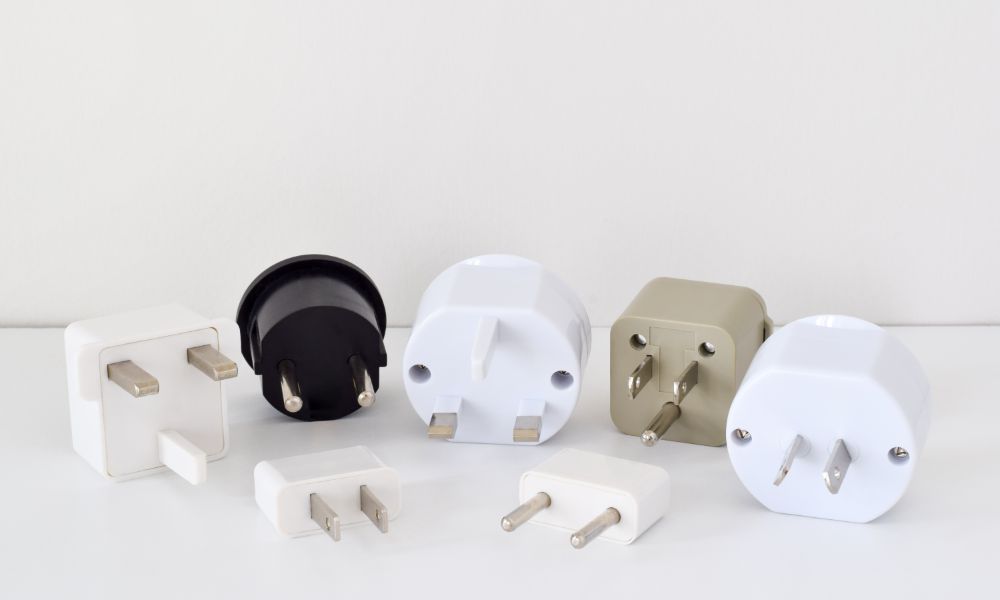
In today’s globalized and highly integrated electrical systems, power socket adapters play a critical role in ensuring compatibility, safety, and functionality. Whether you’re building a testing rig, a control panel, or an industrial machine interface, socket adapters help bridge the gap between device plugs and regional or system-specific sockets.

At Elcom International, we understand the importance of dependable interconnect solutions. Our power socket adapters are engineered for high reliability, thermal safety, and robust performance across a range of demanding applications.

What Is a Power Socket Adapter?

A power socket adapter is an electrical component that allows a plug from one type of socket to be safely used in a different socket type. In simple terms, it acts as a bridge between incompatible plug-socket configurations, whether due to geography, voltage range, or physical interface.

While consumer-grade adapters are common in travel electronics, industrial-grade socket adapters serve much more critical roles—often under continuous operation, heat stress, or in power-critical environments.

Industrial Applications of Power Socket Adapters

Elcom’s range of socket adapters is widely used in:

  • Power Distribution Units (PDUs)
  • Control Panels and Cabinets
  • Test and Measurement Devices
  • Medical Equipment
  • Industrial Automation Systems
  • Power Conditioning Equipment

In each of these environments, socket adapters must meet stringent standards for fire safety, electrical conductivity, and secure mechanical retention.

Why Elcom’s Socket Adapters Stand Out

With decades of experience serving OEMs and system integrators, Elcom’s socket adapters offer:

1. Custom Configurations

Available in modular or snap-fit designs to suit panel-mount or standalone use.

2. Global Compliance

Compatible with international standards such as IEC, BS, IS, and UL.

3. Thermal and Mechanical Endurance

Tested for high load conditions, thermal stability, and mechanical stress over thousands of plug-in cycles.

4. Safe and Flame-Retardant Materials

Manufactured using engineering polymers with high dielectric strength.

Design Considerations for Socket Adapters

When selecting a power socket adapter, engineers must consider:

  • Voltage and current rating (250V, 6A–16A typical)
  • Pin configuration and grounding type
  • Mounting method (panel mount, PCB mount, snap-in)
  • Ingress protection level (IP rating)
  • Contact material for conductivity and wear resistance

As part of the broader ecosystem of electronic components manufacturers, selecting the right socket adapter is critical to ensuring performance and safety in electrical systems.

Customization and OEM Support

Elcom provides complete customization services for socket adapters—tailoring size, material, mounting type, and finish based on your system design.

We partner closely with OEMs and engineering teams during product development to deliver plug-and-play adapter modules that improve efficiency and reduce time to market.

Choose the Right Socket Adapter Partner

If you’re an OEM, integrator, or electrical design engineer looking for high-performance power socket adapters, Elcom’s range offers unmatched reliability, durability, and engineering support.

Starting a shipping business in Singapore can be a lucrative and rewarding venture. However, it is important to carefully consider and plan each step-in order to ensure the success of your business. Here are five steps for starting a shipping business in Singapore:

Determine the type of shipping business you want to start. There are various options to consider, such as becoming a freight forwarder, customs broker, or operating your own fleet of ships. Consider your strengths, resources, and the demand for each type of shipping service in Singapore.

Obtain the necessary licenses and permits. Depending on the type of shipping business you want to start, you may need to apply for various licenses and permits. This can include a freight forwarding license, customs broker license, and ship owner’s license. It is also important to comply with any relevant regulations, such as the International Maritime Organization’s Safety of Life at Sea (SOLAS) convention.

Set up a company. To start a shipping business in Singapore, you will need to set up a company. This can be done through Singapore company incorporation. 3E Accounting Pte Ltd is a corporate service provider that can assist with the process of setting up a company in Singapore. They can guide you through the necessary steps and provide advice on the best business structure for your shipping company.

Establish partnerships and connections. As a shipping business, you will need to establish partnerships and connections with various industry players, such as shipping lines, cargo agents, and ports. Building a strong network can help you secure contracts and grow your business.

Develop a marketing strategy. Marketing is crucial for attracting customers and growing your shipping business. Develop a marketing strategy that includes a website, social media presence, and targeted advertising to reach potential clients. Consider offering promotions and incentives to encourage new business.

Starting a company in Singapore requires careful planning and consideration of various factors. By following these five steps, you can lay the foundation for a successful shipping business in Singapore. Partnering with a reputable corporate service provider, such as 3E Accounting Pte Ltd, can also provide valuable support and guidance throughout the process.


You should apply for an Entrepreneur Pass (Entrepass) if you are an investor, business owner, or entrepreneur with plans to start a firm in Singapore. Keep reading to learn more about the specifics of what is needed to pass the Entrepreneur test.

What Does It Mean To Have A “Entrépass” (EP) In Singapore?

The Singapore Entrepreneur Pass (also known as the Entre pass) is a work visa issued to foreign entrepreneurs who want to set up shop in Singapore. This also includes business owners and financiers who are thinking of making Singapore their base from which to grow across the rest of ASEAN and Asia. The core features of the entrepass include:

  • No minimum wage is required by law.
  • It’s good for a year, but you may renew it for another year, and each subsequent renewal extends that year’s term by another year.
  • No levy or minimum wage must be given to employees.
  • Everyone in your immediate family, including kids and grandparents, is invited to join you (if you meet certain requirements).

immigrationsg

What are the most useful new aspects of the Enhanced Entrepass system this year?

On August 3, 2017, new and significant changes will be made to the entrepass plan in an effort to attract top talent from across the world and entice them to set up shop in Singapore, where they can help foster the growth of the country’s thriving startup and high technology sectors. Some of the modifications are as follows:

  • Adjustments to evaluation standards for startups with the aim of attracting more qualified workers.
  • The need of documentation proving the applicant’s commercial, investment, or entrepreneurial experience and successes.
  • The Entrepass’s validity period will be extended by a factor of two after the initial renewal, giving business owners more time to build their enterprises.
  • The previous requirement for potential company owners to provide paid-up capital of SGD$50,000 has been eliminated.

When applying for an updated Entrepass, what are the requirements now?

You need to be at least 21 years old and either actively pursuing or actively engaged in the establishment of your own company in order to apply for an Entrepass. The following are some additional requirements:

Here are some of the most recent and crucial criteria: Your business must either have access to substantial venture funding or possess groundbreaking technologies.

You have invented, formulated, manufactured, or offered to the public an IT product, service, or platform. You’ve gotten money from venture capitalists or angel investors. These two conditions are now satisfied.

  • Patents registered with a recognized national IP agency.
  • Long-term collaboration in scientific study with a dedicated research group.
  • You must demonstrate that your business is innovative and will help to increase local job possibilities.
  • Your firm must be registered during the first six months of operation.
  • Owning at least 30% of the company’s stock is necessary.

The Entrepass is only available to those who meet one of three criteria, each of which has its own set of qualifications to be eligible for the program.

The MetaTrader 4 a highly-sophisticated platform that many traders around the world use to make their trading activities easier and more efficient.

It is primarily designed for forex trading, but you can still effectively use it to trade many different kinds of financial instruments like stocks, bonds, and commodities.

Now, it is widely-used and popular for good reasons. Many brokers offer trading platforms that traders can use to better conduct their trades and investing activities. It goes without saying that many brokers offer the MT4 platform to those who want to make the most out of their trades.

Let’s see the benefits of using the MetaTrader 4 platform for your trades!

Professional yet Easy User Interface

The logic behind MetaTrader 4’s logic is very complex, owing to the plethora of functions and features that it brings to clients. Such functions and features are designed to make the trader’s activities easier and faster.

It looks professional, and at the same time easy to use. The platform’s design is pretty straightforward that even true beginners in the world of trading can quickly understand how it works.

Pre-loaded Charts and Indicators

Many brokers offer the MetaTrader 4 along with many pre-loaded technical charts, tools, and indicators. These help the trader track the market and price movements more easily and much faster.

Charts and indicators are very important for traders, especially if the trader spends much time scrutinizing the market and interpreting signals after signals.

Another key feature is that you can load other types of charts and indicators of your preference on top of the pre-loaded charts and indicators. This means that if you think you need another chart or indicator to properly analyse the market behaviour, you won’t have to be limited to what the platform already sports.

Available on Different Devices

Not all traders have the luxury to stay at home and stare at multiple monitors to track price movements and market behaviours. Others can only spend a couple of hours or so to trading.

And many others have full-time jobs or businesses that they have to attend to, making trading an additional squeeze into their busy schedule. They’re always on the go, and they can’t possibly go back to trading every now and then.

The MetaTrader 4 platform solves this problem since it can be installed to any kind of mobile device. You can install it on your phone, tablet, laptop, etc, as long as they have the compatible system required. It can be used on devices powered by either Android operating system or iOS. It can also run on Windows and MacOS.

This convenience benefit traders in many ways. But the seeming most important benefit is allowing the trader—you—to keep track of the market and not miss any kind of trading signal. You can carry it anywhere you like as long as you have internet connection.

The MetaTrader 5

Meanwhile, the MetaTrader 4 isn’t the only MetaTrader platform you can choose. There is a more sophisticated platform that more and more brokers now offer to their clients. And it is the MetaTrader 5.

The difference between the MetaTrader 5 and its predecessor is that the MetaTrader 5 is designed not only for forex trading but also for other types of financials instrument.

Still, many traders and brokers choose the MT4 because of its proven performance and convenience.

Dust control fog cannons like those from BossTek are among the best ways to control industrial dust. They leverage advanced technology to prevent airborne dust and comply with employee safety regulations. However, your specific use of fog cannons determines the effective and most efficient type of mount your system uses. For this reason, choosing the best mount affects your operation costs and how effectively you control dust. This article walks you through the types of mounts to help you choose the right one for your fogging system.

Tower-mounted fog cannons

As the name suggests, these cannons are mounted on a tower (pole) to fight airborne dust from above. They are also called pole-mounted dust control units. They aim down in their elevated position, leveraging gravity and a sharp angle towards the ground. The downward flow effectively drops dust particles to the ground. Tower-mounted cannons suit you if you deal with dust moving up from the source, like during demolition. The tower length, throw distance, and adjustment options depend on the brand you’ll buy from. Some brands offer tower mounts ranging up to 20 feet high and can be controlled remotely.

Trailer-mounted fogging cannons

As the name suggests, these systems are mounted on trailers to get the job done even in remote locations that don’t have power. Typically, trailer-mounted fog cannons fuse two power sources to ensure you can use them almost anywhere. That means they are electric and are equipped with a fuel-driven generator. The generator will get the job done when fighting dust in areas where electricity is not easily accessible. For example, the transient nature of the demolition industry requires dust control in various settings that don’t always have reliable power sources. This makes fog cannons highly efficient in such situations. These systems unlock more mobility because most are mounted on roadworthy trailers. For this reason, a trailer-mounted dust control system suits you best if you often move from one job site to another.

Skid-mounted dust control fogging systems

These cannons are mounted on a portable platform for easy storage and transportation. The mounting platform (skid mounts) may take the form of a frame that simplifies moving the cannons with a forklift between locations within your facility. These cannons are less portable than trailer-mounted fogging systems. So, they are your best fit if you need a dust control unit to use within a facility. They aren’t suitable if you plan to use them from job site to job site.

Carriage-mounted cannons

They are mounted on a two-wheel or four-wheel carriage to make them easy to move from job site to job site. Therefore, they are suitable if you often shift your job locations and are suitable for situations like demolition and construction sites.

If you plan to use the dust control unit from job site to job site, a trailer or carriage-mounted cannon will work for you because they are highly mobile. On the other hand, skid-mounted fogging systems suit you best if you want to use them within one facility since they provide the right balance between a permanent and portable mount. Lastly, tower-mounted units are your best bet for any situation where dust particles tend to escape high up in the atmosphere.

Whether you’re bringing in a new employee or providing training for existing ones, you must always take into account the budget and how much you will spend training them. Trust us when we say you wouldn’t want to scrimp on your employees, as they are the backbone of your organization and they are the ones driving success. They require training to have access to relevant knowledge to perform to the necessary standards, may it be in compliance training courses among other topics.

Employee training will come at a cost, and a necessary one at that so you can retain talent while staying competitive. Take a look at the factors involved when it comes to how much it takes to train employees.

How Much Do Companies Spend on Employee Training?

The Association for Talent Development shares that organizations spend about $1,252 per employee on average for training and development initiatives.

While this is a useful starting point and provides insight into the potential cost of employee training, remember that it’s just an average. There are other factors to consider that influence the total spend on employee training, like:

Company Size

One major factor influencing the training cost is your company size. The larger a company, the lower the cost of training employees become. The smaller a company, the higher the cost. Sure, there are fewer people, but training will become more disruptive to operations and smaller businesses lack access to economies of scale.

Employee Skillset

The amount of training employees need will depend on their existing knowledge and skillset, and this would vary from employee to employee. For example, in cybersecurity learning, one employee may know more than another, while others might begin at the same knowledge level and skill set.

Moreover, some people may learn quicker or slower than others, which would influence the total cost in terms of the time invested into training. Those who require further training will incur a greater cost.

Type of Training

Different kinds of training would have different costs.

Do you train employees using the traditional classroom-style raining? Then an external training provider will deliver learning, which would involve labor costs. Employees may also have to travel to the center for training. That’s why companies are now veering away from instructor-led training.

Some companies also opt for on-the-job training or via learning technologies from online training platforms. When using technology-based training, the costs are significantly lower since you won’t pay for instructors to teach for the day.

Productivity Loss

And lastly, time spent training will incur a loss in productivity, as employees cannot spend their time training and working simultaneously. The amount of productivity lost will boil down to two major factors: The number of people involved in the training and how long training takes.

Wrapping It Up

Besides the factors mentioned above, don’t forget about hidden costs like supplies (printing and food), travel time, transportation, and time of the employees and supervisors, among other admin costs!

A laundromat is a lucrative investment with a lot of benefits to offer. It has the opportunity to be your foundation for personal and professional success! Laundromat owners would come from various walks of life, either those new to the business to those making a career change, or people doing it as part of their retirement plan.

We find people devoting themselves to the business full-time while others approach this as a part-time “hustle.” As you can imagine, laundromat owners would approach their businesses differently, with some focusing more heavily on marketing while others are looking into the cost controls and laundry parts from stores like Laundry Replacement Parts.

Either way, one thing we can all agree on is that without experience managing the operations of laundromats, it’s easy to overlook crucial aspects and commit mistakes that eat up revenue. Let’s take a look at some of the common and costly mistakes to avoid.

  1. You install inexpensive equipment

Understandably, not every business owner can afford the latest and most expensive equipment and alliance laundry parts. But we aren’t telling you to get the flashiest one, but at least updated equipment that isn’t dirt-cheap. You may think you’re saving money when you’re actually throwing it away in the long run.

Your laundry equipment will be the most significant expense you’ll face as a laundry owner, and opting for cheaper equipment can cost you more, 40% to be more accurate. You might have to spend more on maintenance and repairs and expect a short lifespan, resulting in the need for constant replacement.

Opt for reliable and energy-efficient equipment to save money and utilities.

  1. You don’t stay up-to-date with service and maintenance

Again with the laundry equipment! Another important thing you must do is care for the equipment, which will likely go through heavy use daily. If you don’t perform the appropriate routine maintenance or have small damaged repaired, you may look at even costlier repairs, even replacement! Moreover, putting some of your equipment out-of-service will lower customer satisfaction, which would have them go to competitions instead.

  1. You don’t focus on customer engagement and marketing

After laundromat owners are through with the grand opening, they tend to get into a certain routine, forgetting about the vital need to attract new customers and engage existing ones. Not focusing on marketing efforts can cost you revenue and have target customers won over by competitors’ promos and advertisements.

As such, you must utilize social media and other marketing strategies to your advantage to have customers come back repeatedly.

  1. You overlook customer service

Customers are the lifeblood of any business, which is why it’s crucial to manage customer service and ensure you provide people with the best experience. This will include handling complaints and issues in-person and online.

If not, it can cost you! One study found that up to 94% of customers avoided businesses because of negative online reviews!

Wrapping It Up

Laundromats are a profitable business but it will only be successful if you are knowledgeable on how to manage one.

Inverse exchange-traded funds try to delivery inverse returns of underlying indexes. To do that, they utilize various strategies that sometimes cause risks.

Compounding Risk

Compounding risk is one of the main types of risks affecting inverse ETFs. Inverse ETFs that are held for more than a day are affected by compounding returns. And since an inverse ETF has a single-day investment objective of offering investment results that are one times the inverse of its underlying index, the fund’s performance likely differs from its investment goals for longer periods greater than one day.

Investors who want to hold inverse ETFs for longer than one day must actively manage and rebalance their positions to mitigate compounding risks.

The effect of compounding returns becomes more obvious during times of high market turbulence. During periods of high volatility, the effects of compounding returns for periods longer than a single day to substantially vary from one times the inverse of the underlying index’s returns.

Derivative Securities

Many inverse ETFs offer exposure by using derivatives. Derivative securities are seen to be aggressive instruments and expose inverse ETFs to more risks.

Swaps are contracts in which one party exchanges cash flows of predetermined financial instrument for cash flows of a another party’s financial instrument for a particular period. Swaps on indexes and ETFs are made to follow the performance of their underlying indexes or securities.

The performance of the ETF may not perfectly track the opposite performance of the index and that’s because of the expense ratios and other factors like the negative effects of rolling futures contracts. Therefore, inverse ETFs that use swaps on ETFs typically carry greater correlation risk and may not attain high degrees of correlation with their underlying indexes compared to funds that only employ index swaps.

Correlation Risk

Correlation risks may be caused by a number of factors, including high fees, transaction costs, illiquidity, expenses, and investing techniques. Even though inverse ETFs try to provide a high degree of negative correlation to their underlying indexes, these ETFs usually rebalance their portfolios every day. This results to higher expenses and transaction costs incurred when adjusting the portfolio.

Further, reconstitution and index rebalancing events may cause inverse funds to be underexposed or overexposed to their benchmarks. These factors may lessen the inverse correlation between an inverse ETF and its underlying on or around the day of these events.

Futures contracts are derivatives traded on an exchange that have a predetermined delivery date of a specified quantity of a certain underlying security, or they may settle for cash on a predetermined date.

Short Sale Exposure Risk

Inverse ETFs may search short exposure through the use of derivative securities, such as swaps and futures contracts, which may cause these funds to be exposed to risks associated with short selling securities.

An increase in the overall level of volatility and a decrease in the level of liquidity of the underlying securities of short positions are the two biggest risks of short selling derivative securities. These risks may reduce short selling funds’ returns, meaning there will be losses.

In order to maintain their records up to date, the Accounting and Corporate Regulatory Authority (ACRA) in Singapore mandates that Singapore-incorporated enterprises submit their yearly financial statements in XBRL format. Choosing the apt XBRL Filing Services for the task is an important task.

In light of the outbreak, businesses should keep a number of considerations in mind while producing and submitting their XBRL financial statements in the near future. So, here are three significant events that happened throughout the course of the previous year.

It has been decided to modify the XBRL document filing requirements

New reporting obligations, the first of which will take effect on January 1, 2021, will be enforced by the ACRA beginning with the first day of the year. Despite the dire economic conditions surrounding Covid-19, the ACRA has decided to extend the deadline in order to give enterprises more time to comply with the new XBRL filing requirements and data components that have been implemented.

According to the most recent revision, companies must comply with the new XBRL filing requirements and data components by May 1, 2021. Organizations may also choose to voluntarily accept revised reporting standards before they become a legally enforced obligation. Before adopting the new XBRL filing requirements and data items, it would be useful to test the system to ensure that everything functions as expected and that no errors are encountered.

singapore pr

In the first instance, the BizFinx Preparation Tool is being phased out of the system

Since 2014, the BizFinx platform has made it possible to submit XBRL financial reports via the use of a number of tools and other resources. Until the ACRA released the BizFinx multi-upload tool in May 2019, companies were not permitted to submit several XBRL files to the BizFinx server at the same time. As a result of these modifications, firms will no longer be needed to utilise the BizFinx website in order to validate and submit XBRL financial statements.

As a result, ACRA has decided to decommission the BizFinx site on October 1, 2020, in accordance with the law.

Financial Statements in XBRL Format:Preparation and Administration (Extensive Business Reporting Language)

You have three options for preparing your XBRL financial statements: in a word processor, a spreadsheet, or both.

  • You may make use of the preparation tool to help you prepare and submit your annual tax return.
  • You may either utilize accounting software or do it manually to prepare and file your annual tax return on time.
  • When it comes to creating high-quality XBRL financial statements for your company, it’s ideal to delegate the task to a reputable service provider that has experience in the field.
  • Interested in learning more about the XBRL financial reporting process? Do you have any questions or concerns? If that’s the case, there are experts to assist you in any way they can.

Constantly attempting to keep up with all of the ACRA changes and new reporting requirements might lead to feelings of tiredness and confusion. When you have a dependable partner on your side, you can put your troubles aside and focus on building your business.